Skip to primary navigationSkip to main contentSkip to footer
Gold, Jewelry & Diamond Buying Event! Oct 27–29 Learn More
  • (508) 764-7250
  • Store Hours
  • Our Store
  • Make an Appointment
Morin Jewelers logo
  • Shop All
    Jewelry Categories
    Online ShowcaseEngagement RingsWedding BandsFashion RingsEarringsNecklaces and PendantsBraceletsChainsCharmsMen's JewelryAccessories
    Best Sellers
    Stud EarringsDiamond BraceletsDiamond NecklacesBangle BraceletsCape Cod
    Diamond Jewelry
    Fashion RingsEarringsNecklaces and PendantsBraceletsLab Grown Diamonds
    Gemstone Jewelry
    Choose Your BirthstoneFashion RingsEarringsNecklaces and PendantsBraceletsPearls
    Precious Metal Jewelry
    Fashion RingsEarringsNecklaces and PendantsBracelets
    Shop By Designer
  • Bridal
    Rings by Shape
    RoundPrincessEmeraldOvalCushionPearMarquiseHeartView All
    Rings by Type
    Proposal ReadySettings for Your StoneRing and Band SetsView All
    Bands for Her
    Ready TodayLab Grown BandsAnniversary BandsEternity BandsRing insertsView All
    Bands for Him
    Ready TodayGoldDiamondTanatalumTitaniumTungstenView All
    Diamonds
    Earth Mined DiamondsLab Grown DiamondsView All DiamondsAntwerp Diamonds
    Services & Financing
    Bridal ConsultationBuild Your Own RingCustom Bridal JewelryFinancing
    Popular Designers
    AshiOstbyeOvernightJewelry Innovations
    Menu image
  • Diamonds
    Loose Shapes
    RoundPrincessEmeraldOvalCushionRadiantPearHeartMarquiseAsscherView All
    Diamond Sources
    Earth Mined DiamondsLab Grown DiamondsView All Diamonds
    Mined Diamond Jewelry
    Morin Signature DiamondsDiamond StudsTennis BraceletsFashion RingsEarringsNecklaces & PendantsBracelets
    Lab Diamond Jewelry
    Diamond StudsDiamond HoopsTennis BraceletsFashion RingsEarringsNecklaces & PendantsBracelets
    Education
    The 4Cs of DiamondsDiamond Buying GuideDiamond Jewelry Care
    Menu image
  • Gemstones
    Popular Gemstones
    AlexandriteAmethystAquamarineBlue SapphireEmeraldMoissaniteOpalPearlRuby
    Gemstone Jewelry
    Fashion RingsEarringsNecklaces & PendantsBracelets
    Education
    Find Your BirthstoneCaring for Gemstone JewelryStone Buying Guide
    Menu image
    Menu image
  • Men's Den
    Men's Categories
    Ready TodayWedding BandsRingsEarringsNecklaces & PendantsChainsBraceletsWatchesCufflinks
    Men's Styles
    Signet RingsTitanium BandsGold ChainsLeather BraceletsDog Tags
    Easy Gifts
    Under $400Under $800
    Menu image
    Menu image
  • Custom
    Learn About Our Process
    Jewelry Restoration
    Upgrading Your Old Jewelry
    Book an Appointment
    Engagement Ring Builder
    Custom Jewelry Gallery
    Menu image
    Menu image
  • Services
    Appointments
    Custom Designs
    Cleaning & Inspection
    Financing
    Jewelry Insurance
    Jewelry Education
    Jewelry Restoration
    Jewelry Repairs
    Pearl & Bead Restringing
    Ring Resizing
    Tip & Prong Repair
    Watch Battery Replacement
    Menu image
    Menu image
  • Sale
  • (508) 764-7250
  • Store Hours
  • Our Store
  • Make an Appointment
Morin Jewelers logo
Log In
  • SearchToggle Search Menu
  • Sign inToggle My Account Menu
    Login

    Don’t have an account? Sign up now

    Reset your password

    Enter the email address on your account and we’ll send you a recovery link.

    • My Account
    • Track My Order
    • Wishlist
    • Logout
  • Wish ListToggle My Wishlist
  • Bag (0)Toggle Shopping Cart Menu
  1. Home
  2. Antwerp Diamonds
Southbridge, Massachusetts  ·  Antwerp, Belgium

Antwerp Diamonds, Hand-Selected in Belgium

Hand-selected at the center of the world’s diamond trade. Explained in person on Main Street.

Every year, Morin Jewelers travels nearly 10,000 miles to Antwerp — the center of the world’s diamond trade — to hand-select diamonds for customers back home in Southbridge.

Our direct access to the Antwerp diamond exchange means you are choosing from stones a third-generation jeweler picked in person, then sitting down with that jeweler to understand exactly what you are looking at.

  • Why Antwerp
  • How we buy
  • Is it better?
  • Earth to hand
  • Cut & the 4Cs
  • Ways to buy
  • Find your diamond
  • FAQ
Direct access to the Antwerp diamond exchange

Chosen by Hand in Antwerp.
Explained in Person in Southbridge.

Antwerp gives us access to the widest selection of diamonds anywhere. What it does not do is grade them — so we compare stones by eye at the exchange, bring back the ones that outperform their paperwork, and put them on the table in front of you.

Explore Natural Diamonds Schedule a Consultation 409 Main Street, Southbridge, MA  ·  (508) 764-7250  ·  Hours & directions
1920
Serving Central Massachusetts
3rd
Generation family-owned
GIA
Graduate gemologist on site
~10,000
Miles traveled to Antwerp
The diamond capital of the world

Why Antwerp matters in the diamond world


Antwerp, Belgium is the oldest and largest diamond trading center on earth. According to the Antwerp World Diamond Centre, roughly 84% of the world’s rough diamonds and about half of all polished diamonds pass through the city. If you own a diamond, there is a meaningful chance it moved through Antwerp on its way to you.

Nearly six centuries of trade

The first written record of diamond trading in Antwerp dates to 1447, when a city magistrate issued rules against trading false stones. That continuity is the point: the customs, contracts and handshake standards of the modern diamond business were largely written here.
The diamond square mile

The trade is concentrated into a few traffic-restricted streets beside Antwerp’s central station — Hoveniersstraat, Rijfstraat and Schupstraat. Inside that small district sit diamond offices, cutting works, gemological labs, brokers and banks that deal in almost nothing else.

Four of the world’s diamond bourses

A bourse is a members-only exchange where diamonds are bought and sold under enforced trade rules. Antwerp hosts four of the roughly two dozen bourses worldwide — more than any other city. Membership is vetted, and reputation is the currency.

What actually happens in the diamond district

Rough diamonds arrive from mining countries and are sorted, valued and sold. Cutters and planners study individual stones to decide how to shape them for the best combination of beauty and yield. Polished goods are sorted into parcels by shape, size, color and clarity. Grading laboratories examine stones and issue reports.

Brokers and buyers — including independent jewelers who travel in from around the world — sit at tables under north-facing daylight and compare stone against stone. It is, in short, the widest single concentration of diamond supply and diamond expertise anywhere.

Why access to that market matters to you

  • Depth of selectionFar more stones in a given size, shape and quality range than any single store could stock.
  • Stone-to-stone comparisonTwo diamonds with identical grades on paper can look different in person. Selection happens by eye, not by spreadsheet.
  • Fewer hands in betweenBuying closer to the source removes layers of markup between the cutter and you.
  • Sourcing to a briefA jeweler who knows your budget, your setting and the shape you want can look for that specific stone.
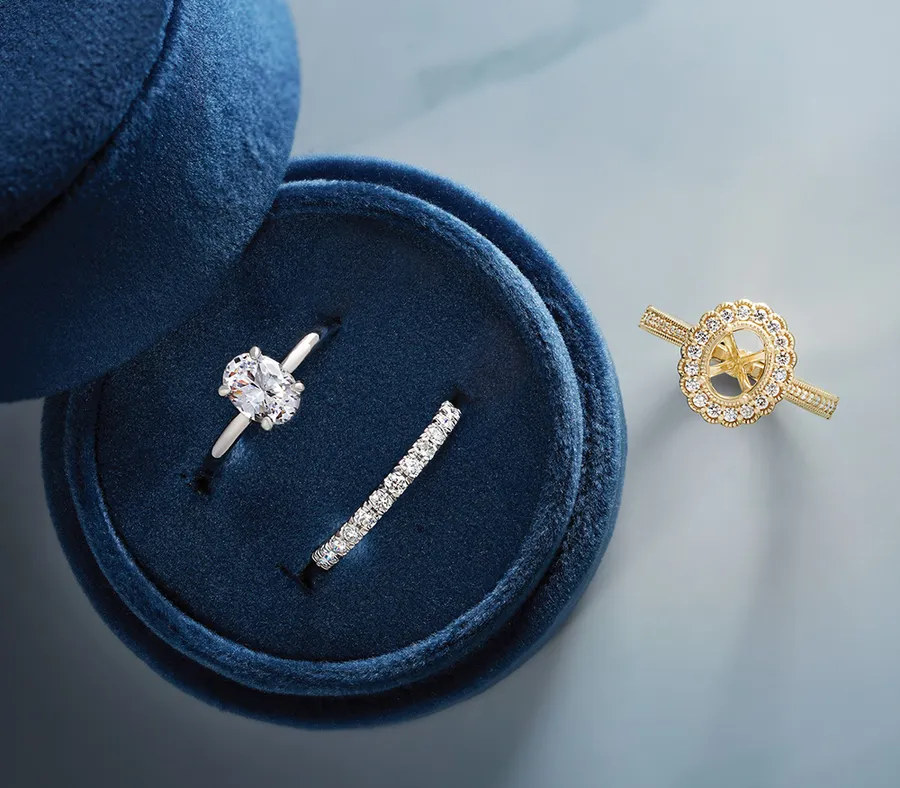
A diamond engagement ring and wedding band in a navy velvet ring box at Morin Jewelers

See the difference in person

Two diamonds can share a city of origin and still be worlds apart. Two can share identical grades and still look different. We put stones in front of you and explain what you are seeing.

Book a Diamond Consultation Read the Buying Guide
Our connection

How Morin Jewelers buys diamonds in Antwerp


Rather than ordering from a domestic wholesaler’s list, we travel to Antwerp and hand-select diamonds in person for our customers in Southbridge and throughout Central Massachusetts.

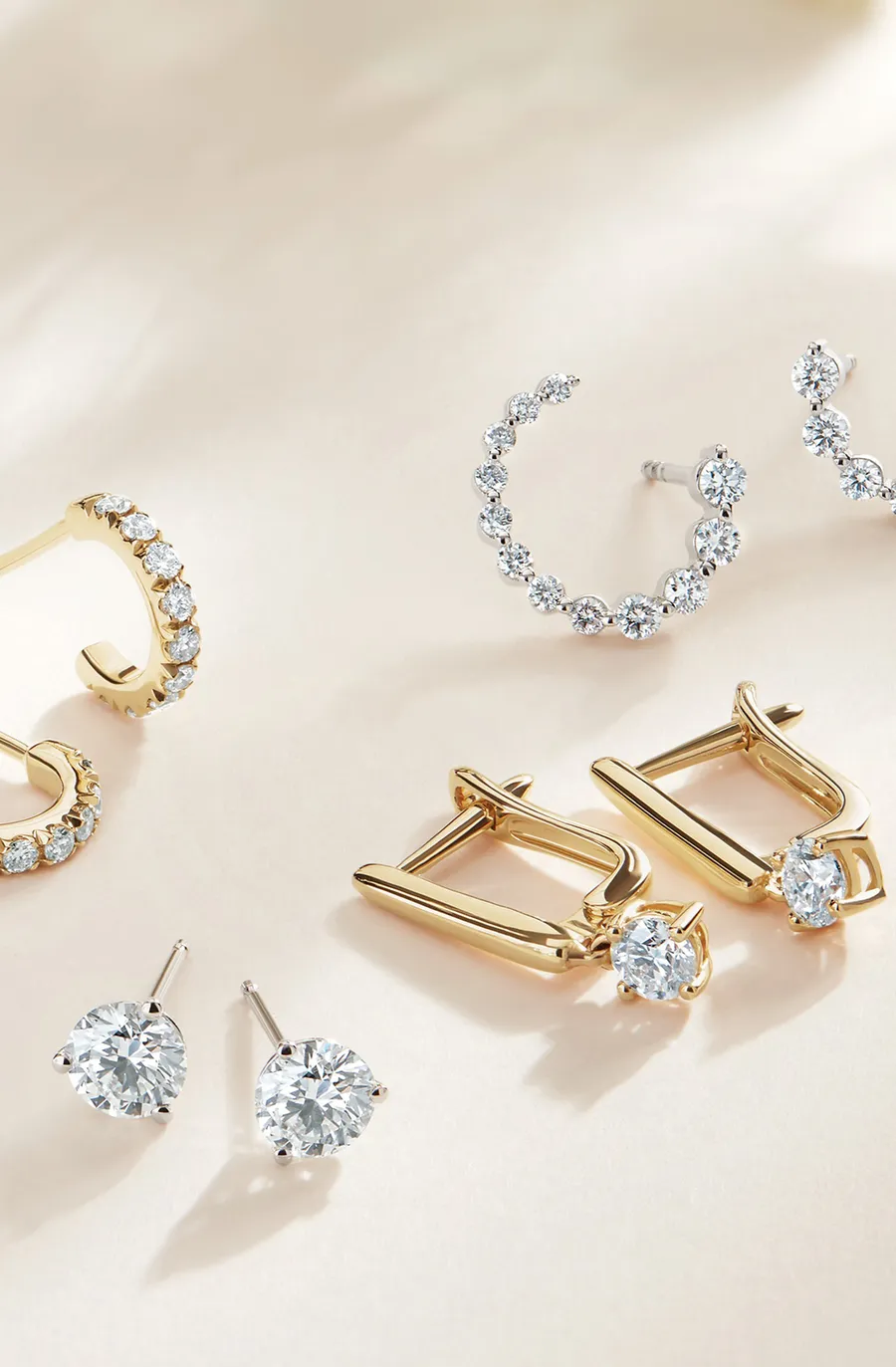
Loose diamonds and diamond earrings laid out side by side for comparison
Selected stone against stone, not from a list

That trip is not a formality. Selecting a diamond well is a physical, comparative task: laying stones side by side, turning them under controlled light, checking how a grade on a report actually presents to the eye, and setting aside the stones that outperform their paperwork. It is the part of diamond buying that cannot be done from a photograph.

Buying at the exchange also shortens the chain. Every additional party between the cutting wheel and the display case adds cost. Purchasing directly cuts out the middleman, and we extend that savings to our customers — which is why a diamond selected this way can represent stronger value than the same specification bought through a longer supply chain.

Read the Morin Jewelers story

What that access means when you’re shopping

  • A wider field to choose fromYou are not limited to what happens to be in one showcase on the day you walk in.
  • A stone matched to your settingAn oval that suits a halo is not necessarily the oval that suits a solitaire. Shape, proportion and depth are chosen against the actual ring.
  • A stone matched to your budgetThere is usually more than one honest way to reach a number. We will show you where a grade can be adjusted without a visible difference — and where it cannot.
  • A person accountable for the choiceThe same jeweler who selected the diamond explains it, sets it, and services it for years afterward.
An honest answer

Is an “Antwerp diamond” a better diamond?


Not automatically — and any jeweler who tells you otherwise is selling you a city rather than a stone. “Antwerp diamond” describes where a diamond was traded, not a grade of quality. What Antwerp gives a buyer is access and choice. Quality still comes from the diamond itself.

Where it was sourced & traded

The country a diamond was mined in and the market it was sold through. This affects availability, documentation and price — not the optics of the stone. Antwerp’s role is at this stage.

How it was cut

The single largest influence on how a diamond looks. Cut quality governs how light returns to your eye as brightness, fire and scintillation. A well-cut lower-color diamond routinely outshines a poorly cut higher-color one.

The 4Cs

Cut, Color, Clarity and Carat weight together set a diamond’s rarity and price. These are the measurable characteristics that let you compare one stone against another on a like-for-like basis.

Certification

An independent gemological laboratory examines the diamond and issues a grading report describing its measurements and 4C grades. The report is evidence; it is not the diamond. Two stones with the same report can still look different.

Craftsmanship

How the diamond is set, secured and finished. A beautiful stone in a poorly built mounting is a stone at risk. Setting work, prong quality and finishing are where a bench jeweler earns their keep.

Provenance

The documented path a diamond took to reach you, including compliance with the Kimberley Process. This speaks to how responsibly a stone was traded — a separate question from how beautiful it is.

The short version

Judge the diamond first, then judge the source

Antwerp widens the field of stones available to you. It does not grade them. A diamond traded through Antwerp can be exceptional or entirely ordinary, because the world’s largest marketplace necessarily handles both — and the city name on the invoice tells you nothing about how the stone will look on a hand.

What decides that is the cut, the color, the clarity and the carat weight, confirmed by an independent grading report and then checked with your own eyes. Sourcing determines what you get to choose from. The 4Cs determine which one you should take home. Read our guide to the 4Cs.

The supply chain, explained

How a diamond travels from the earth to your hand


A natural diamond passes through several specialized hands before it reaches a jewelry store. Understanding those stages makes it much easier to judge what you are actually buying — and to know which questions to ask.

  1. Rough diamond recovery

    Diamonds are recovered from mines and alluvial deposits, then sorted by size, shape, color and clarity. At this stage a rough stone looks little like the finished gem.

    Mining countries
  2. Trading & sourcing

    Rough is valued and sold into the trade through established diamond centers. This is the stage where Antwerp dominates, and it is the stage at which Morin Jewelers buys.

    Antwerp and other diamond centers
  3. Cutting & polishing

    A planner maps the rough stone to decide the shape that best balances beauty against weight retention. The diamond is then cleaved or sawn, bruted, faceted and polished. Decisions made here determine most of the finished diamond’s appearance.

    Cutting centers worldwide
  4. Grading & certification

    An independent gemological laboratory measures the polished diamond and issues a grading report covering cut, color, clarity, carat weight, proportions and any treatments. The report travels with the stone as its objective description.

    Independent laboratories
  5. The jewelry professional

    A jeweler selects individual stones, verifies them, matches them to settings, and takes responsibility for the finished piece. This is where a diamond stops being inventory and starts becoming your ring.

    Morin Jewelers — Southbridge, MA
  6. You

    You see the diamond in person, compare it against alternatives, and decide. Afterward the relationship continues through sizing, cleaning, inspection, repair and insurance appraisal.

    409 Main Street
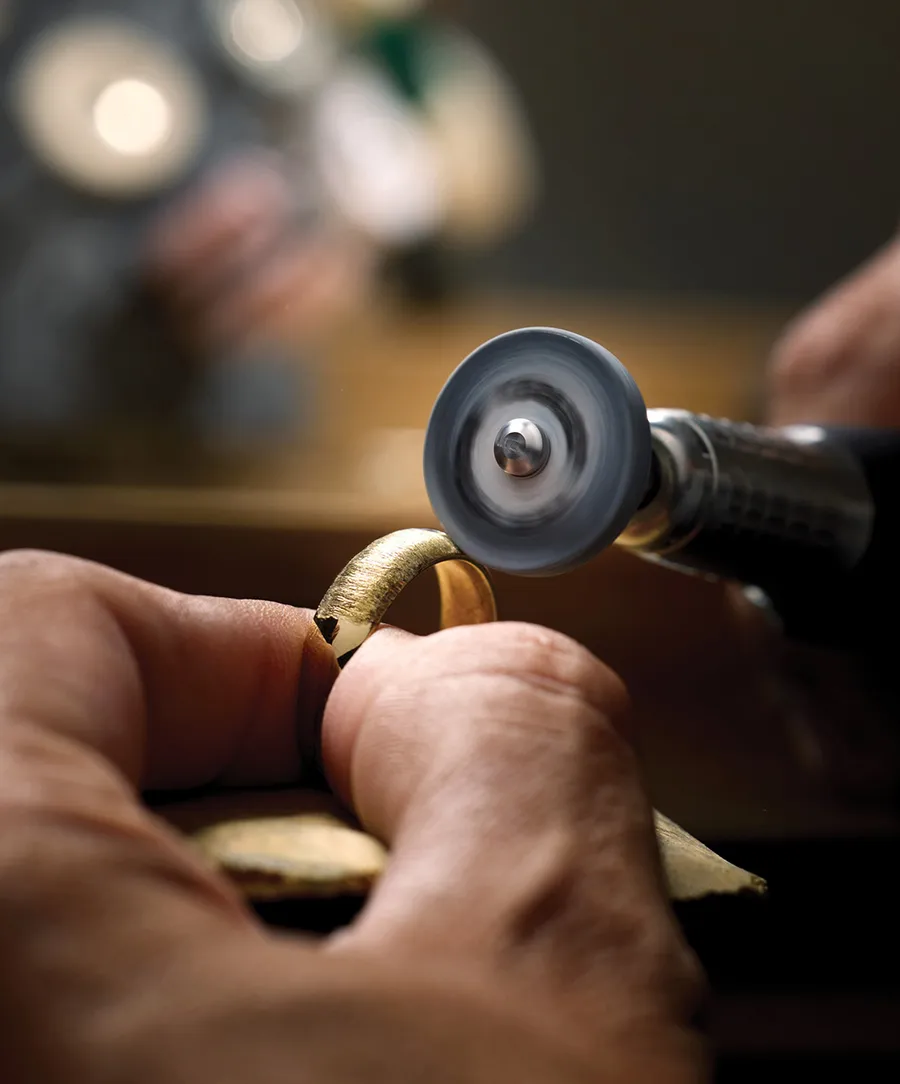
A bench jeweler polishing a gold ring at the Morin Jewelers workbench
Set and finished at our own bench in Southbridge

Where Morin Jewelers sits in this chain

We are a jewelry professional with direct buying access at the trading stage. We do not mine diamonds, and we do not operate a cutting factory or a grading laboratory — those are separate, specialized industries, and independence at the grading stage is exactly what makes a report worth having.

What we do is select, verify, advise, set and stand behind. Rob Morin is a Gemological Institute of America graduate, a working goldsmith and bench jeweler, and the third generation of his family to run the store.

More about our history and credentials

Evaluate the stone, not the label

Cut decides more than the city ever will


Of the four Cs, cut is the one you can actually see across a room. It governs how light enters a diamond, travels inside it, and comes back to your eye — and it is where proportions, not paperwork, do the work.

A shallow-cut diamond in profile: light entering the crown passes through and escapes the bottom of the stone
Cut too shallow Light strikes the pavilion at too low an angle, passes straight through and escapes the bottom. The stone looks wide but watery. Light leaks out
A well-proportioned diamond in profile: light entering the crown reflects off both pavilion sides and returns up through the table
Cut to good proportions Light reflects off one pavilion facet to the opposite one, then returns up through the table — brightness, fire and scintillation. Light returns to your eye
A deep-cut diamond in profile: light entering the crown reflects once and escapes through the side of the pavilion
Cut too deep Light reflects once and exits through the side. The stone carries its weight below the girdle, so it also faces up smaller. Light leaks out

Cut

How well the facets are proportioned and finished. Cut controls light return, and it is the C that most affects whether a diamond looks alive. Spend here first.

Color

Graded D (colorless) through Z. Differences between neighboring grades are subtle face-up, especially once a stone is set — and warmer grades can look beautiful in yellow or rose gold.

Clarity

The number, size and position of natural inclusions. What matters practically is whether inclusions are visible to the unaided eye, not whether they exist. Many are not.

Carat

Weight, not size. Five metric carats equal exactly one gram. Because larger rough is rarer, price rises sharply at popular weights — and a well-cut stone can face up larger than its weight suggests.

Natural, earth-mined diamonds

Natural diamonds and what responsible sourcing means


A natural diamond is pure carbon crystallized deep in the earth’s mantle under extreme heat and pressure, carried toward the surface by volcanic activity over geologic time. Every natural diamond is finite, individually formed, and unrepeatable — which is the whole basis of its rarity.

The Kimberley Process, plainly explained

The Kimberley Process is an international certification scheme created to prevent conflict diamonds — rough diamonds used to finance armed rebellion against legitimate governments — from entering the legitimate diamond trade. Participating countries require that rough diamond shipments be sealed, certified and traded only with other participants.

Morin Jewelers proudly complies with the Kimberley Process, and by doing so we import conflict-free diamonds into the United States.

It is worth being precise about what the scheme does. The Kimberley Process is a rough-diamond certification system focused specifically on conflict financing. It is a floor, not a full audit of every labor or environmental practice in the industry. Reputable sourcing therefore also rests on who you buy from, the records they keep, and the relationships they have built over time. We would rather tell you that than overstate it.

Natural or lab-grown — both are real diamonds

Lab-grown diamonds are chemically, physically and optically diamond; the difference is origin, rarity and price, not authenticity. They are graded on the same 4Cs and should always be disclosed as lab-grown, which reputable grading reports do.

Antwerp sourcing specifically concerns natural, earth-mined diamonds. If you are weighing the two, we are happy to put a natural stone and a lab-grown stone side by side and talk through the trade-offs honestly, without steering you.

Natural Diamonds Lab-Grown

Ways to buy a diamond

Antwerp sourcing, traditional retail and online marketplaces


There is no single right way to buy a diamond — there are trade-offs, and the best choice depends on how much guidance you want and how much you care about seeing the stone first. Here is a fair look at all three.

Morin Jewelers

Antwerp-sourced through an independent local jeweler

Selection
Access to the world’s largest diamond marketplace, narrowed to a short list chosen for your budget, shape and setting.
Guidance
A GIA-graduate gemologist walks you through the grades and shows you what they mean on the actual stone.
Seeing the diamond
In person, in daylight, next to alternatives, before you decide.
Customization
In-house custom design and an on-site bench for setting, sizing and repair.
Trade-off
Requires a visit or an appointment; we are a small independent store, not a 24-hour warehouse.

Traditional retail & chain jewelry stores

Selection
Limited to what the store or its buying group stocks, which is chosen for broad appeal rather than for you.
Guidance
Varies widely by location and by who is working that day; gemological training is not guaranteed.
Seeing the diamond
Yes — whatever is in the case.
Customization
Often sent out to a third party rather than done on site.
Trade-off
Convenient and familiar, but the supply chain is longer and the selection is not sourced to your brief.

Online diamond marketplaces

Selection
Very large listings, typically drop-shipped from shared virtual inventory rather than held in hand.
Guidance
Filters, search tools and chat support. Excellent for research; less useful for judging a specific stone.
Seeing the diamond
Photos and video only until it arrives. Eye-clean, brilliance and how a stone reads in real light are hard to assess on a screen.
Customization
Preset setting options; bespoke work is generally not available.
Trade-off
Convenient and price-transparent, but you are comparing paperwork, and aftercare means shipping the ring away.

Many customers do both: research online to learn the vocabulary, then come in to see real stones before committing. We think that is a sensible way to buy, and we are glad to be the second half of it.

Central Massachusetts

Why buy your diamond through a local jeweler


A diamond is one of the few significant purchases most people make exactly once, with no practice run. The value of buying locally is not sentiment — it is having a trained person in the room with you while you make it, and still being able to find that person five years later.

The Morin Jewelers storefront at 409 Main Street in Southbridge, Massachusetts
409 Main Street, Southbridge  · 
  • See the diamond with a professional beside youWe will show you what an inclusion looks like under magnification, and whether you can see it without.
  • Understand the 4Cs on your own stoneGrades stop being abstract once you are holding two diamonds that differ by one of them.
  • Match the diamond to the settingProng settings accommodate almost any size; bezel and tension settings have real limits.
  • Have a candid conversation about budgetTold plainly, and without pressure. There is usually more than one honest route to a number.
  • Compare real alternativesSide by side, in the same light, on the same day.
  • Build something customFrom sketch to 3D CAD rendering to setting and finishing, with our own bench doing the work.
  • Keep a jeweler after the saleCleaning, inspection, prong checks, resizing, restoration and insurance appraisals — from the same store, for years.
  • Start wherever you likeEngagement rings, build your own ring, custom design, or a setting for a stone you own.

Morin Jewelers has served Central Massachusetts from 409 Main Street in Southbridge since 1920. Customers regularly visit us from Sturbridge, Charlton, Dudley, Spencer, Webster and Auburn, and from across Worcester County — a straightforward drive from the Worcester area for anyone who would rather choose a diamond in person than on a screen.

Start your search

Find your diamond


Browse our natural diamond inventory by shape, carat weight, cut, color, clarity and price — then bring your short list to us and we will look at the stones together. If you do not see what you are after, tell us what you want and we will look for it.

  • Round
  • Oval
  • Emerald
  • Cushion
  • Princess
  • Radiant
  • Pear
  • Marquise
  • Asscher
  • Heart

Shop loose natural diamonds  ·  Build your own ring

Common questions

Antwerp diamond FAQ


Straight answers to the questions customers actually ask us about Antwerp, diamond sourcing and buying a diamond in Central Massachusetts.

What are Antwerp diamonds?

“Antwerp diamonds” are diamonds bought or traded through Antwerp, Belgium — the world’s largest and oldest diamond trading center. The term describes the marketplace a diamond passed through, not a grade, brand or certification. Antwerp handles diamonds of every quality level, from exceptional to ordinary.

Why is Antwerp famous for diamonds?

Antwerp has been trading diamonds since at least 1447 and has grown into the industry’s central marketplace. According to the Antwerp World Diamond Centre, roughly 84% of the world’s rough diamonds and about half of all polished diamonds pass through the city. Antwerp is also home to four of the roughly two dozen diamond bourses worldwide — more than any other city — along with cutters, brokers, gemological laboratories and specialist banks concentrated into a few streets known as the diamond square mile.

Are Antwerp diamonds better quality than other diamonds?

Not by virtue of the city alone. Because Antwerp is the largest diamond marketplace in the world, it trades diamonds across the full quality spectrum. What Antwerp offers is selection and access — a buyer can compare an unusually wide range of stones in one place. Quality is determined by the individual diamond’s cut, color, clarity and carat weight, and confirmed by an independent grading report.

Are Antwerp diamonds conflict-free?

Morin Jewelers proudly complies with the Kimberley Process, the international certification scheme created to keep conflict diamonds out of the legitimate diamond trade, and through that compliance we import conflict-free diamonds into the United States.

To be precise about what that means: the Kimberley Process certifies rough diamond shipments between participating countries and targets diamonds used to finance armed conflict. It is a meaningful safeguard rather than a complete audit of every practice in the supply chain, which is why who you buy from and the relationships behind that purchase still matter.

How does Morin Jewelers source diamonds from Antwerp?

Morin Jewelers has direct access to the Antwerp, Belgium diamond exchange. Each year we travel nearly 10,000 miles to Antwerp to hand-select diamonds in person for our customers in Southbridge and across Central Massachusetts. Buying at the exchange removes intermediary layers from the supply chain, and we pass that savings along to our customers.

Does Morin Jewelers have access to Antwerp diamonds?

Yes. Direct access to the Antwerp diamond exchange is part of how Morin Jewelers buys diamonds for our customers, and it is one of the things that distinguishes us from big-box chain stores. Diamonds are selected by hand rather than ordered sight-unseen from a list.

Are Antwerp diamonds more expensive?

Antwerp is not a premium label that adds cost. Diamond pricing is driven by the 4Cs — cut, color, clarity and carat weight — plus shape, market conditions and how many parties handled the stone along the way. Because buying at the exchange shortens that chain, sourcing this way is intended to improve value rather than add to the price.

Can I choose my own Antwerp diamond?

Yes. You can browse our natural diamond inventory online by shape, carat, cut, color, clarity and price, and then view stones in person at our Southbridge store. Tell us your budget, the shape you want and the setting you have in mind, and we will put together a short list to compare side by side rather than asking you to choose from a screen.

Can I use an Antwerp diamond in a custom engagement ring?

Yes. Hand-selected diamonds can be set into one of our engagement ring settings, used with our Build Your Own Ring tool, or designed into a fully custom piece. Our custom process runs from consultation and sketch through 3D CAD rendering to setting and finishing, with the work done by our own bench jewelers.

What should I look for when buying a diamond from Antwerp?

Look at the diamond itself before you look at its origin story. Prioritize cut quality, since it governs how much light the stone returns. Check whether inclusions are visible to your unaided eye rather than chasing a clarity grade on paper. Consider how the color grade will read in the metal you have chosen. Confirm there is an independent grading report, and ask the jeweler to show you how the stone compares against alternatives in the same price range.

Are Antwerp diamonds certified?

Certification is separate from sourcing. A diamond’s grading report is issued by an independent gemological laboratory that examines the polished stone and documents its measurements, proportions, 4C grades and any treatments — regardless of which market the diamond was traded through. Ask us which laboratory graded any particular diamond you are considering, and we will go through the report with you line by line.

How do the 4Cs affect the value of an Antwerp diamond?

The 4Cs are what set the price. Cut quality determines brilliance and is where most buyers get the best return on their money. Color is graded D to Z, and neighboring grades are often indistinguishable once a stone is set. Clarity describes natural inclusions, many of which are invisible without magnification. Carat is weight rather than size, and price climbs sharply at popular weights. Adjusting the grades you cannot see in order to protect the ones you can is the core of buying well.

Can I buy an Antwerp diamond in Southbridge, MA?

Yes. Morin Jewelers is located at 409 Main Street, Southbridge, MA 01550, and has served Central Massachusetts since 1920. We are open Tuesday through Friday from 9:30am to 5:30pm and Saturday from 9:30am to 3:00pm. You can call or text us at (508) 764-7250, or book an appointment if you would like dedicated time with a jeweler.

Where can I buy a diamond near Worcester, MA?

Morin Jewelers in Southbridge is an independent, family-owned jeweler serving the greater Worcester area and Worcester County, including Sturbridge, Charlton, Dudley, Spencer, Webster and Auburn. We offer natural and lab-grown loose diamonds, engagement rings, custom design, and on-site jewelry repair and restoration, with a Gemological Institute of America graduate gemologist on staff.

Visit us

See Antwerp diamond sourcing in person


The most useful thing we can do is put diamonds on the table in front of you and talk you through what you are looking at. Come in with an idea, a photograph, a budget, or nothing at all — no pressure, no obligation, and no question too basic.

Make an Appointment Explore Diamonds

Visit
409 Main Street
Southbridge, MA 01550
Call or text
(508) 764-7250
Send us a message
Hours
Mon: Closed
Tue–Fri: 9:30am – 5:30pm
Sat: 9:30am – 3:00pm
Sun: Closed

Ten thousand miles, so the diamond you choose was chosen by hand.

Diamonds From Antwerp  Morin Jewelers Southbridge, MA

Diamonds From Antwerp

Contact Us
Call Us (508) 764-7250
Text Us (508) 764-7250
Send us a Message
Visit Us
409 Main Street
Southbridge, MA 01550
Monday: Closed
Tue-Fri: 9:30am - 5:30pm
Saturday: 9:30am - 3:00pm
Sunday: Closed
Customer Care
  • Order Lookup
  • Returns
  • Our Services
  • Appointments
  • Flexible Financing
  • Our Policies
  • Our Warranties
  • Shipping & In-Store Pickup
  • Natural Diamond Upgrade Program
More Ways to Shop
  • Events
  • Wish List
  • Gift Cards
  • Bridal Catalog
  • Apply Iddeal Credit
About Us
  • Why Morin?
  • FAQ's
  • Reviews
  • Community
  • The Morin Blog
Education
  • Popular Diamond Shapes
  • The 4 C’s of Diamonds
  • Anniversary Gift Guide
  • Jewelry Education
  • Jewelry Care
  • Antwerp Diamonds
Shop Jewelry
  • All Jewelry
  • Rings
  • Earrings
  • Watches
  • Necklaces
  • Men’s Jewelry
  • Design Your Own Ring
BECOME A MORIN INSIDER
Follow Us
  • Visit the jvc website
  • Visit the gia website
  • Visit the ijo website
  • Visit the authorizenet website
  • Return Policy
  • Privacy Policy
  • Terms & Conditions
  • Accessibility Statement

© 2026 Morin Jewelers. All Rights Reserved.

Powered by: Punchmark

My Cart
You have 0 items in your Cart.
Loading cart items
Loading

Learn how we use cookies in our Privacy Policy or manage cookie preferences.