
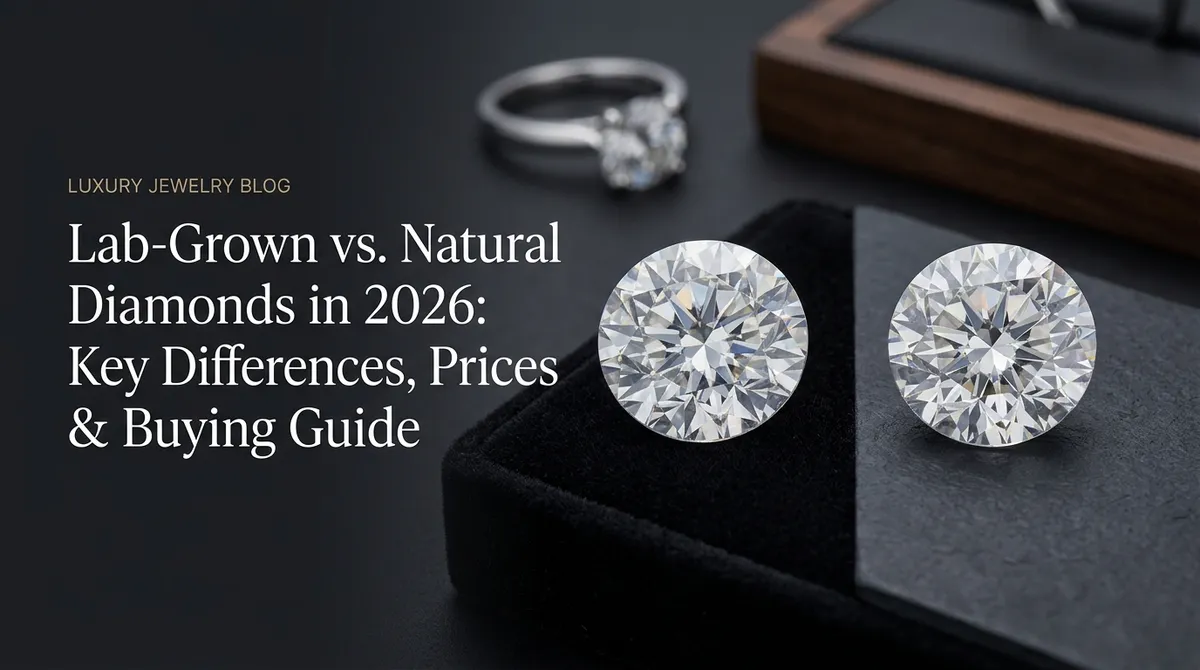
Lab-Grown vs. Natural Diamonds in 2026: What’s the Difference and Which Diamond Is Right for You?
Choosing an engagement ring in 2026 often begins with one important question: should you choose a lab-grown diamond or a natural diamond? Both are genuine diamonds with the same basic chemical composition, crystal structure, durability, and visual characteristics. The meaningful differences are their origin, rarity, market pricing, and the personal priorities they represent.
The diamond market is changing quickly. Lab-grown diamonds now account for a substantial share of engagement-ring purchases, while natural diamonds continue to appeal to buyers who value geological rarity, natural origin, tradition, and long-term emotional significance. At Morin Jewelers in Southbridge, Massachusetts, we believe shoppers should understand both options before making a decision.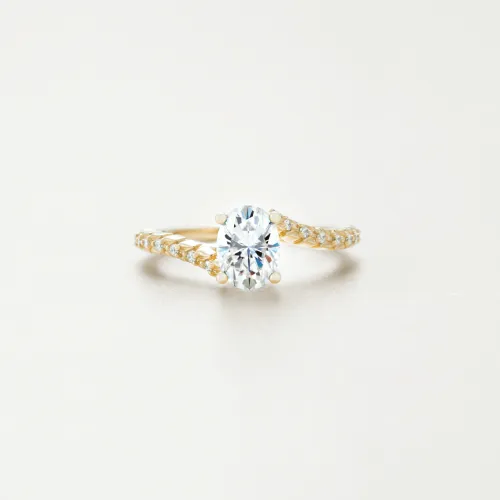
Lab-Grown vs. Natural Diamonds: The Quick Answer
The short answer: A lab-grown diamond is a real diamond created in a controlled laboratory environment. A natural diamond is a real diamond formed by geological processes deep within the Earth. Neither option is automatically right for everyone.
Lab-grown diamonds generally provide more size or design flexibility for a given budget. Natural diamonds offer a finite geological origin and rarity that many buyers find meaningful. The best diamond for an engagement ring depends on your budget, style, values, expectations about future value, and the story you want the ring to represent.
Browse our full diamond inventory or book a private consultation to compare both side by side in Southbridge.
When comparing lab-grown diamonds vs. natural diamonds, focus first on the individual stone. Cut quality, color, clarity, carat weight, proportions, fluorescence, symmetry, certification, and the quality of the setting all affect the appearance and price of a finished engagement ring. If you are new to these terms, start with our guide to the 4Cs of diamonds.
What Is a Natural Diamond?
A natural diamond forms underground through immense heat and pressure over an extremely long geological period. Carbon atoms bond in the crystal structure associated with diamond, and the resulting rough stone is eventually recovered, cut, polished, graded, and set into jewelry.
Every natural diamond has a geological history. Its rarity is connected not only to its appearance, but also to the limited natural supply of diamond rough that can be economically recovered, cut, and brought to market. You can see how this plays out in our own inventory of earth-mined diamonds and our curated Antwerp diamond selection.
Natural diamonds are not all alike. Two diamonds with the same carat weight can differ significantly in brightness, fire, proportions, inclusions, color, fluorescence, and price. A grading report and an in-person evaluation remain important when comparing stones.
What Is a Lab-Grown Diamond?
A lab-grown diamond is produced using technology that recreates some of the conditions under which diamond forms. The two primary growth methods are HPHT, or High Pressure High Temperature, and CVD, or Chemical Vapor Deposition.
HPHT diamonds
HPHT technology uses high pressure and high temperature to grow diamond material from a small diamond seed. The process is related to the heat and pressure conditions associated with natural diamond formation.
CVD diamonds
CVD technology grows diamond in a chamber containing carbon-containing gas. Energy creates a plasma, allowing carbon to deposit layer by layer onto a diamond seed.
Both methods can produce gem-quality diamonds. The growth method does not, by itself, determine whether a diamond is attractive or suitable for an engagement ring. The individual stone still needs to be assessed for cut, color, clarity, proportions, and any post-growth treatment.
Shop certified lab-grown diamonds, or browse finished lab-grown diamond jewelry including studs, hoops, and tennis bracelets.
Are Lab-Grown Diamonds Real Diamonds?
Yes. Lab-grown diamonds are real diamonds, not diamond simulants. The Federal Trade Commission explains that laboratory-created gemstones have the same chemical, physical, and visual properties as their natural counterparts, although they are manufactured rather than naturally formed.
The important distinction is origin. A lab-grown diamond is made by people using industrial technology; a natural diamond forms naturally underground. The two origins should be disclosed accurately and clearly when a diamond is sold.
Moissanite and cubic zirconia are different materials and are not lab-grown diamonds. They can imitate the appearance of diamond, but they do not have the same chemical composition and physical properties.
Lab-Grown vs. Natural Diamonds: Side-by-Side Comparison
| Consideration | Lab-grown diamond | Natural diamond |
|---|---|---|
| Origin | Created in a laboratory using HPHT or CVD technology. | Formed naturally underground through geological processes. |
| Chemical composition | Crystalline carbon, with diamond’s characteristic structure. | Crystalline carbon formed naturally. |
| Physical properties | Comparable hardness, thermal behavior, and durability to natural diamond. | The same fundamental diamond properties, subject to the stone’s characteristics. |
| Appearance | Can be colorless or colored and can display excellent brilliance and fire. | Can be colorless or colored and can display excellent brilliance and fire. |
| Durability | Suitable for everyday wear when properly cut and securely set. | Suitable for everyday wear when properly cut and securely set. |
| Grading | A report should identify the stone as laboratory-grown and may identify HPHT, CVD, or post-growth treatment. | A report evaluates the natural diamond’s 4Cs and other characteristics. |
| Rarity | Manufacturing capacity can expand as technology and production develop. | Finite geological origin and natural formation. |
| Price | Generally less expensive than a comparable natural diamond, although prices vary by stone and seller. | Generally more expensive because of natural rarity, supply, demand, and market structure. |
| Long-term value | Retail prices have declined substantially in recent years; future prices are uncertain. | Natural rarity may support enduring desirability, but retail purchase price does not guarantee resale value. |
| Resale | Usually should not be purchased as an investment; resale depends on market conditions, stone quality, and buyer demand. | May have a broader secondhand market, but resale is commonly below the original retail price. |
| Environmental considerations | Requires significant energy; environmental impact depends on technology, facility, and electricity source. | Mining has land, energy, water, and community impacts that vary by operation and oversight. |
| Ethical sourcing | Origin is laboratory production, but buyers should still ask about manufacturing transparency and claims. | Ask about the supplier, chain of custody, applicable sourcing standards, and origin documentation. |
| Availability | Often available in larger sizes and a broad range of shapes and grades. | Availability depends on natural supply, shape, size, quality, and sourcing. |
The comparison describes general market characteristics. Actual pricing, quality, availability, and future value depend on the individual diamond and transaction.
Ready to compare real stones instead of a chart? Search our earth-mined diamond inventory and our lab-grown diamond inventory by shape, carat weight, color, and clarity.
Lab-Grown Diamond Prices vs. Natural Diamond Prices in 2026
Lab-grown diamonds are generally less expensive than natural diamonds of similar carat weight, color, clarity, and cut quality. The difference is primarily related to origin, supply, manufacturing economics, and market demand—not because a lab-grown diamond is a diamond simulant.
Recent 2026 reporting illustrates the size of the gap. The Financial Times reported that the average retail price of a one-carat round lab-grown diamond fell to approximately $768 by May 2026, down 79% from January 2020. A comparable natural diamond was reported at approximately $4,553, down 24% over the same period.
Another 2026 industry report based on BriteCo data found that the median lab-grown diamond price fell from $4,622 per carat in 2019 to $2,057 in 2025, while the corresponding natural-diamond figure was $8,428 per carat.
These figures are not quotes for every diamond. Prices vary according to shape, cut quality, color, clarity, fluorescence, certification, treatment, retailer, setting, and whether the figure refers to a loose stone, center stone, or complete engagement ring. Our diamond search shows current pricing on each stone we can source, and flexible financing is available if you want to spread the purchase over time.
Why lab-grown prices have changed
Lab-grown diamond production can be expanded through manufacturing capacity. As production scales and retailers compete for similar stones, prices can move downward, particularly for popular shapes and sizes. This creates an advantage for buyers who want a larger center stone or more elaborate setting today, but it also means future prices are difficult to predict.
Why natural diamond prices have changed
Natural diamond pricing is affected by mine production, inventories, consumer demand, economic conditions, wholesale trading, fashion, shape preferences, and the supply of particular qualities. Rapaport reported that one-carat diamond prices fell 9.9% during 2025, while some smaller sizes experienced steeper declines.
Price movement does not mean that every natural diamond or lab-grown diamond changes value by the same percentage. The best way to compare prices is to evaluate stones with comparable quality characteristics and reports. Our diamond buying guide walks through how to make that comparison fairly.
Do Lab-Grown Diamonds Hold Their Value?
Lab-grown diamond prices have declined significantly in recent years, so buyers should be cautious about treating a lab-grown diamond as an investment. A lower purchase price can make a lab-grown engagement ring an excellent value for someone who prioritizes size, design, or budget flexibility, but “value” is not the same as future resale price.
There are at least four different meanings of value:
- Purchase value: How much diamond and craftsmanship you receive for your budget.
- Market value: What a buyer might pay under current market conditions.
- Insurance value: An estimated replacement cost, which is not the same as resale value. See our jewelry insurance information.
- Emotional value: The personal meaning attached to the engagement, marriage, design, and memories.
A lab-grown diamond may offer strong purchase value because it can provide more size for the money. However, ongoing production improvements and price competition may place downward pressure on resale prices. No jeweler should guarantee that a lab-grown diamond will retain a particular percentage of its purchase price.
Do Natural Diamonds Hold Their Value?
Natural diamonds also should not automatically be described as investments. A diamond purchased at retail may resell for less than its original price because the original transaction included design, labor, retail overhead, marketing, and other costs. Resale offers can also differ depending on whether the buyer is a jeweler, auction house, private purchaser, or specialty dealer.
Natural diamonds do have a finite geological origin, and many buyers value that rarity. That can contribute to long-term desirability, especially for unusual sizes, colors, shapes, and qualities. It does not guarantee that every natural diamond will appreciate or even retain its original retail price.
If future flexibility matters to you, ask about documentation, trade-in policies, warranties, appraisals, and service before purchasing. A reputable jeweler should explain the difference between an appraisal, a retail price, a trade-in credit, and an actual resale offer. You can review our warranties and store policies before you buy, and our restoration and upgrade service is often the practical path for repurposing a stone you already own.
Diamond Grading and Certification
A diamond grading report documents characteristics such as carat weight, color, clarity, cut or proportions, measurements, and identifying features. It also identifies whether a diamond is natural or laboratory-grown.
GIA lab-grown diamond reports
The Gemological Institute of America has graded laboratory-grown diamonds since 2007. GIA reports for laboratory-grown diamonds identify the stone as laboratory-grown and can state whether it was produced using CVD or HPHT technology. They may also indicate evidence of post-growth treatment.
GIA also reported in 2026 that its iD100 screening instrument uses spectroscopy to distinguish natural diamonds from laboratory-grown diamonds and diamond simulants, including testing for loose and mounted stones.
Other grading laboratories
IGI and other established laboratories also issue reports for laboratory-grown and natural diamonds. The report should clearly identify the diamond’s origin, list the relevant quality information, and correspond to the laser inscription or documentation provided with the stone.
Reports are valuable, but they do not replace an experienced evaluation. Two diamonds with similar report grades can look different because of proportions, light performance, inclusions, transparency, fluorescence, or the quality of the cut. Every diamond we sell is certified and searchable online, and our gemologist will review the report with you in the store.
How Are Lab-Grown Diamonds Identified?
A laboratory-grown diamond can look indistinguishable from a natural diamond without specialized testing. Standard visual inspection alone is not a reliable way to determine origin.
Gemological laboratories and professional jewelers use instruments and advanced testing methods that look for growth patterns, inclusions, strain, fluorescence, phosphorescence, and other characteristics associated with HPHT or CVD growth. A jeweler may also examine a laser inscription on the girdle and review the accompanying report.
If you are buying a diamond, ask to see the grading report and confirm that the report’s identification matches the stone. If you already own an unreported diamond and want to know its origin, schedule an appointment and we can recommend appropriate screening or laboratory identification.
Environmental and Ethical Considerations
Environmental claims require careful wording. Lab-grown diamonds do not require conventional diamond mining, but growing diamond material requires substantial energy. The environmental profile can vary according to the growth method, facility efficiency, electricity source, location, and how the producer measures and verifies its claims.
Natural-diamond mining can affect land, water, energy use, biodiversity, and local communities. The impact varies significantly between mines and operators. Buyers who prefer natural diamonds should ask about responsible sourcing, supplier transparency, chain of custody, and applicable industry standards. Our Antwerp diamond program is one example of a documented sourcing channel we can explain in detail.
Buyers who prioritize laboratory production should ask how the diamond was grown, what energy claims are documented, and whether environmental statements are independently supported. It is better to ask specific questions than to assume that either origin is automatically “sustainable” or “ethical.”
The FTC advises consumers to understand whether a gemstone is natural, manufactured, or treated and to look for accurate disclosures before buying.
Which Is Better for an Engagement Ring?
There is no universally best diamond. The right choice depends on what matters most to you and your partner.
A lab-grown diamond may be a good fit if you prioritize:
- A larger center stone or more elaborate setting within a fixed budget.
- Lower initial purchase price compared with a comparable natural diamond.
- A diamond created in a laboratory rather than recovered through mining.
- Modern technology and a clearly documented manufactured origin.
- Allocating more of the budget toward the setting, wedding bands, travel, or other priorities.
Search lab-grown diamonds by shape and carat weight →
A natural diamond may be a good fit if you prioritize:
- Natural geological origin and finite rarity.
- The traditional meaning associated with a mined diamond.
- A natural stone as an heirloom or family keepsake.
- Particular interest in provenance, rarity, or unusual natural characteristics.
- A broader history of natural-diamond ownership and collecting.
Search earth-mined diamonds by shape and carat weight →
For either option, prioritize:
- Excellent cut quality and attractive light performance.
- A grading report that clearly identifies origin and quality.
- A secure, well-made setting.
- A design that suits the wearer’s lifestyle and personal style.
- A jeweler who will provide inspection, cleaning, sizing, repair, and advice after the sale.
Build the Ring Around Your Stone
Pick a lab-grown or natural center diamond, then pair it with a setting you love using our engagement ring builder. Prefer something one of a kind? Explore our custom design process and custom jewelry gallery.
Lab-Grown vs. Natural Diamonds: Pros and Cons
| Option | Potential advantages | Important trade-offs |
|---|---|---|
| Lab-grown | Lower initial price, greater size flexibility, real diamond properties, manufactured origin. | Prices have fallen, future resale is uncertain, production requires energy, and not every stone has the same cut quality. |
| Natural | Natural geological origin, finite rarity, traditional meaning, and broad consumer recognition. | Higher initial price, mining-related environmental and sourcing considerations, and no guarantee of resale profit. |
How to Choose the Right Diamond for You
- Set a complete-ring budget. Decide how much you want to spend on the center stone, setting, wedding band, taxes, insurance, and future services. Financing options can help you plan the whole purchase.
- Choose a preferred shape. Round, oval, cushion, emerald, pear, radiant, and other shapes have different appearances and pricing patterns. Our guide to the most popular diamond shapes is a good starting point.
- Prioritize cut and light performance. A well-cut diamond can appear more lively and brilliant than a larger diamond with weaker proportions. Review the 4Cs before you compare stones.
- Decide how you feel about origin. Consider whether natural formation, laboratory production, or simply the appearance and meaning of the finished ring matters most.
- Compare equivalent stones. Review lab-grown and natural diamonds with similar shape, size, color, clarity, cut quality, and documentation.
- Evaluate the setting. The ring’s metal, prongs, profile, comfort, and durability matter as much as the center stone. Compare proposal-ready rings, settings for your own stone, and ring and band sets.
- Plan for ownership. Ask about inspections and cleaning, resizing, repairs, appraisals, warranties, and insurance documentation.
- Choose the diamond you will be happy to wear. The emotional meaning of an engagement ring is personal and cannot be measured by price or origin alone.
Questions to Ask Before Buying a Diamond
- Is the diamond natural, laboratory-grown, treated, or a simulant?
- Which laboratory issued the grading report?
- Does the report number match the laser inscription or stone documentation?
- How does the diamond perform visually in different lighting?
- What are the cut, color, clarity, and carat details?
- Does the stone have fluorescence or other characteristics that affect appearance?
- Was the stone grown using HPHT or CVD, and was it treated after growth?
- Is the price for the loose diamond or the complete ring?
- What is the return or exchange policy?
- What warranty or service plan is included?
- Can the ring be resized, and what limitations apply to the design?
- Are inspections and cleanings available after purchase?
- How is an appraisal value different from resale or trade-in value?
- What happens if the diamond needs tip or prong repair or the setting requires maintenance?
More answers are on our frequently asked questions page.
Why an Independent Local Jeweler Can Help
Online diamond shopping can provide access to a large inventory, but it can also make comparison more difficult. Product photographs may not reveal how a diamond performs in person, and two stones with similar grades can have noticeably different visual character.
An independent jeweler can help you compare stones side by side, understand the grading report, evaluate the setting, and balance your preferences against your budget. You can also discuss custom design, wedding-band pairing, ring sizing, future inspections, repairs, and appraisal needs with the same local team.
For couples in Southbridge, Sturbridge, Charlton, Dudley, Worcester, and throughout Central Massachusetts and Worcester County, an in-person consultation can make the decision more understandable and less pressured.
Why Choose Morin Jewelers?
Morin Jewelers is a family-owned jewelry business serving Southbridge, Massachusetts, and surrounding Central Massachusetts communities. The store is located at 409 Main Street, Southbridge, MA.
Morin Jewelers has been part of the community since 1920 and offers natural and lab-grown diamond options, engagement rings, wedding bands, custom jewelry design, diamond education, jewelry repair, ring resizing, cleaning and inspections, appraisals, and fine jewelry.
With an experienced gemologist and goldsmith available to guide the process, Morin Jewelers can help you compare the differences between a lab-grown diamond and a natural diamond without steering you toward one answer automatically. The goal is to find a diamond and ring design that fit your budget, priorities, lifestyle, and personal meaning. See what our customers say in our reviews.
Compare Your Options in Person
Not sure which diamond is right for you? Visit Morin Jewelers in Southbridge, Massachusetts, and compare your options with an experienced independent jeweler. Bring your questions, preferred style, and budget, and ask to review both lab-grown and natural diamond possibilities.
Book a private diamond consultation | Browse certified diamonds | Design your own ring | Call or text (508) 764-7250
Final Takeaway
Lab-grown and natural diamonds are both real diamonds, but they represent different origins, market dynamics, and buying priorities. Lab-grown diamonds generally cost less and may allow a larger stone or more elaborate design within a fixed budget. Natural diamonds appeal to buyers who value geological rarity, natural origin, tradition, and the idea of a finite material formed by nature.
Neither option is automatically a better investment, more meaningful engagement ring, or more responsible choice in every circumstance. Look beyond the label, compare the individual diamond, review the documentation, understand the service policy, and choose the stone that feels right for you and your partner.
Frequently Asked Questions
Are lab-grown diamonds real diamonds?
Yes. Lab-grown diamonds are genuine diamonds with diamond’s characteristic chemical and physical properties. Their difference from natural diamonds is their origin: laboratory production rather than natural geological formation. You can browse our certified lab-grown diamonds here.
Are lab-grown diamonds cheaper than natural diamonds?
Generally, yes. Comparable lab-grown diamonds usually cost less than natural diamonds, although the exact difference depends on shape, cut, color, clarity, size, certification, and the complete ring design. Recent 2026 reporting shows a substantial price gap between one-carat lab-grown and natural diamonds. Compare current pricing in our diamond search.
Which is better, lab-grown or natural diamonds?
Neither is universally better. Lab-grown diamonds may suit buyers prioritizing size and budget, while natural diamonds may suit buyers prioritizing natural origin and geological rarity. Cut quality, documentation, setting quality, and personal preference matter for both. Book an appointment to see both in person.
Do lab-grown diamonds lose value?
Lab-grown diamond prices have declined substantially in recent years, so future resale value is uncertain. A lab-grown diamond should be purchased for its beauty, meaning, and usefulness as jewelry—not as a guaranteed investment.
Do natural diamonds hold their value?
Natural diamonds can have enduring desirability because of their rarity, but a retail purchase price does not guarantee resale value. Resale depends on the stone, market conditions, documentation, buyer, and transaction costs.
Can a jeweler tell if a diamond is lab-grown?
Specialized screening and identification equipment can distinguish many laboratory-grown diamonds from natural diamonds. GIA’s iD100 system is designed to screen natural diamonds, laboratory-grown diamonds, and diamond simulants using spectroscopy. A grading report and matching identification information should accompany a diamond purchase. Contact our gemologist if you want a stone you already own evaluated.
Are lab-grown diamonds GIA certified?
GIA has graded laboratory-grown diamonds since 2007. A GIA laboratory-grown diamond report identifies the stone as laboratory-grown and can include the growth method and evidence of post-growth treatment. Other established laboratories, including IGI, also issue reports for laboratory-grown diamonds.
Are lab-grown diamonds good for engagement rings?
Yes. A well-cut, properly graded, securely set lab-grown diamond can be an excellent engagement-ring center stone. The same practical concerns apply as with a natural diamond: cut quality, durability, setting security, wearability, documentation, and after-sale service. Start with our engagement ring collection or the ring builder.
Are natural diamonds still popular in 2026?
Yes. Natural diamonds continue to have strong consumer demand and remain important in engagement rings and fine jewelry. At the same time, lab-grown diamonds have captured a large share of engagement-ring units, making the market more divided by buyer priorities and budget. See our earth-mined diamond selection.
What should I consider before buying a diamond?
Consider origin, budget, shape, cut, color, clarity, carat weight, certification, treatments, setting quality, return policy, warranty, resizing, inspection, appraisal, and future service. Our diamond buying guide covers each of these, and comparing both diamond options with a knowledgeable jeweler can help you make a more confident decision.
Are lab-grown diamonds sustainable?
There is no single answer for every producer. Lab-grown diamonds avoid conventional mining but require substantial energy, and their environmental impact depends on production technology and electricity sources. Natural-diamond impacts vary by mine and sourcing practices. Ask for specific, documented information rather than relying on broad environmental claims.
Keep Learning
Sources and Further Reading
- Gemological Institute of America: Diamond Buyers Guide and Laboratory-Grown Diamond Reports
- GIA: Diamond Identification Technology
- Federal Trade Commission: Buying Gemstones, Diamonds, and Pearls
- BriteCo: Jewelry, Diamond, and Watch Price Index 2026
- Financial Times: The 2026 Diamond Market and Changing Lab-Grown Prices
- Rapaport: Diamond Market Cautious at Start of 2026