
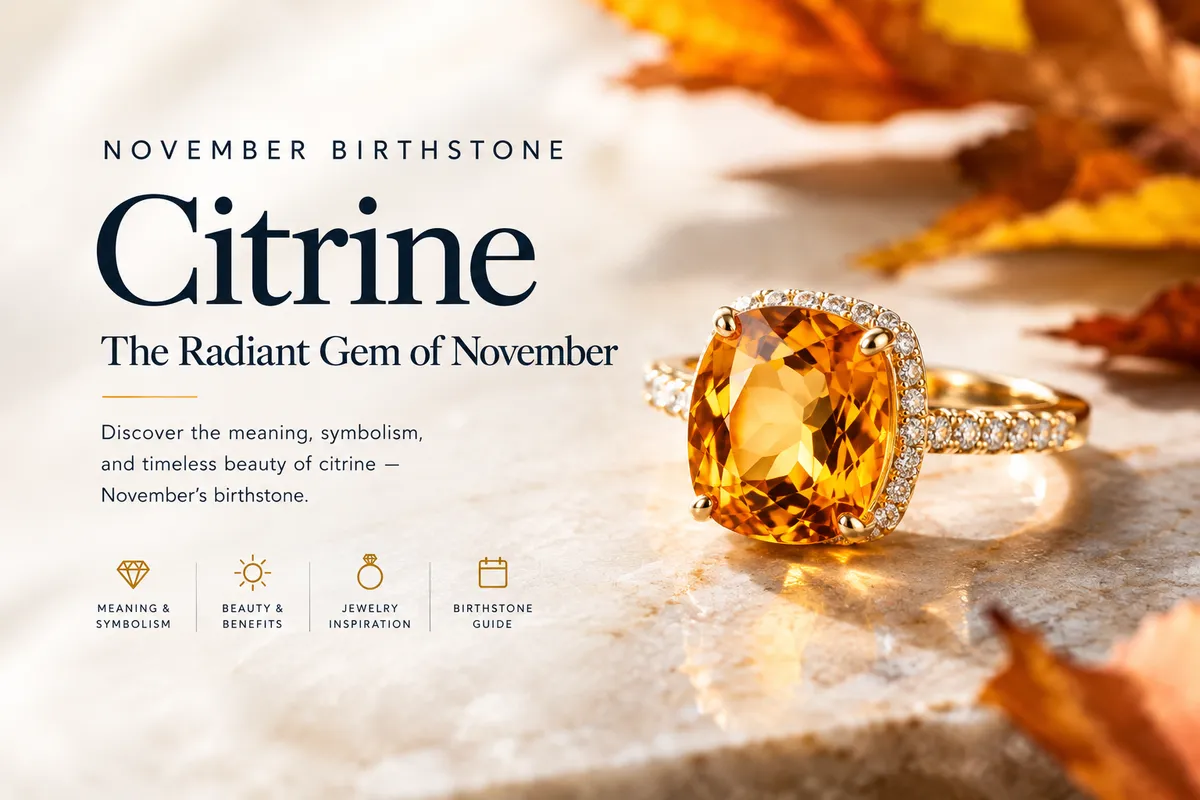
November is one of the few months with two birthstones. Here is what topaz and citrine mean, the colors worth knowing, how to care for each, and how to choose, from a family jeweler on Main Street in Southbridge since 1920.
The short answer
November has two birthstones: topaz and citrine. Topaz is the traditional stone and comes in more colors than almost any gem, from golden Imperial topaz to the blue topaz most people picture today. Citrine, a sunny golden variety of quartz, was added as a second November birthstone in 1952. Both are durable enough for everyday jewelry and among the most affordable fine gemstones.
Why November has two birthstones
The birthstone list most American jewelers use dates to 1912, when the National Association of Jewelers (today’s Jewelers of America) standardized one gem for each month. November got topaz. In 1952 the Jewelry Industry Council of America revised the list and added citrine.
The pairing has deep roots. Before modern gemology, jewelers called nearly any golden-brown gem “topaz,” so plenty of antique “topaz” is actually citrine, a different mineral. You will still see old trade names like “topaz quartz” and “smoky topaz” on tags; both are quartz, not topaz.
Topaz: the traditional November birthstone
The name may come from the Sanskrit tapas, meaning “fire,” or from the Greek topazos. The ancient Greeks believed topaz gave them strength. From the 1300s to the 1600s, Europeans thought it could break magic spells and calm anger, and in India it has long been worn above the heart for a long life, beauty and intelligence.
Topaz has one of the widest color ranges of any gemstone. These are the varieties worth knowing:
Golden topaz
Honey yellow to golden orange, the color that made topaz November’s stone. Harder than citrine, which it is often mistaken for.
Imperial topaz
Pinkish to reddish orange and the most prized topaz color. There is no official standard for the name, so judge the color, not the label.
Ask us to source oneBlue topaz
Airy sky blue, bright Swiss blue and deep, inky London blue. All genuine topaz, and the most popular today.
Pink topaz
A vivid purplish pink is the rarest topaz color of all. Northwestern Pakistan is a known source.
Ask us to source oneWhite topaz
Colorless and crisp, a bright accent for stacking rings and studs at a fraction of the cost of diamond.
Shop white topazMystic topaz
Colorless topaz with a thin surface coating that creates a rainbow effect. Clean it with mild soap only.
Is blue topaz natural?
Blue topaz is genuine topaz, but its color almost always comes from treatment: colorless topaz is irradiated, then heated. The color is permanent and the treatment is regulated in the U.S., which is why a large, eye-clean blue stone costs so little.
Where does topaz come from?
Brazil’s Minas Gerais state has produced fine golden and Imperial topaz for over two centuries; pink topaz comes from northwestern Pakistan.
Topaz from our collectionTry any of these on in Southbridge, or order online for free in-store pickup.
 London blue bypass ring, 14K
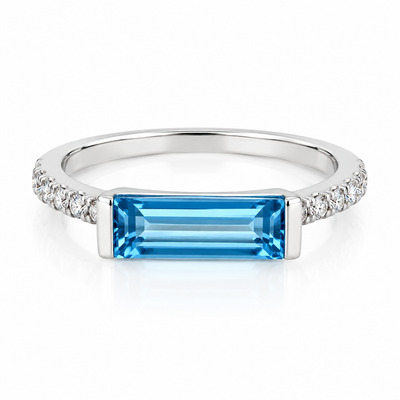 Blue topaz & diamond ring, 14K
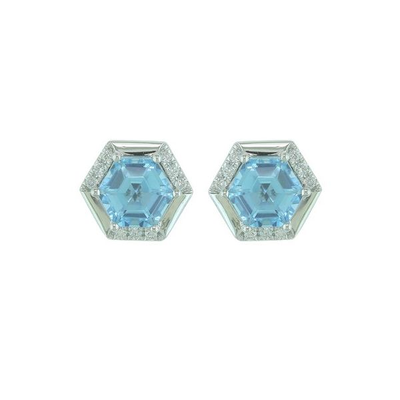 Blue topaz halo earrings, 14K
 Blue & white topaz drops
Browse more: topaz rings · earrings · necklaces · all blue topaz
Citrine: November’s golden birthstone
Citrine’s name is thought to come from citron, French for lemon. Because it was mistaken for topaz for so long, it inherited topaz’s reputation for soothing tempers. Today it is linked with warmth, optimism and success. Citrine has been reported in Roman jewelry and was a favorite in the colorful Scottish jewelry of the Victorian era.
Lemon citrine
Pale, bright yellow. Fresh and easy to wear with white or yellow gold.
Golden citrine
A saturated yellow-orange, the classic citrine color and the most valued when free of brownish tints.
Madeira citrine
Deep reddish orange, named for the color of Madeira wine.
Is citrine natural or heat-treated?
Natural citrine is rare. Most citrine on the market began as amethyst, also a quartz, that was heated until it turned golden. The change is permanent and the stone is still genuine quartz. Lab-grown citrine exists too, so ask what you are buying; we will tell you exactly what any stone in our case is.
Where does citrine come from?
Most heat-treated citrine starts as Brazilian amethyst. Natural citrine comes from Bolivia, Spain, Madagascar, Mexico and Uruguay; Bolivia’s Anahí mine also yields ametrine, a two-color mix of amethyst and citrine.
Citrine from our collectionWarm color that loves yellow gold, at prices that make a bigger stone possible.
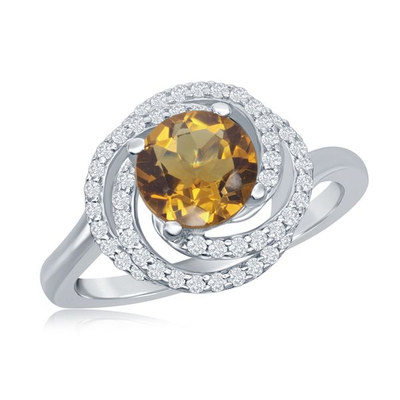 Golden citrine halo ring
 Citrine & white topaz drops
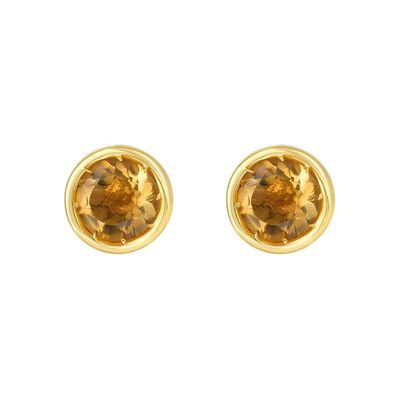 Citrine bezel studs, 14K
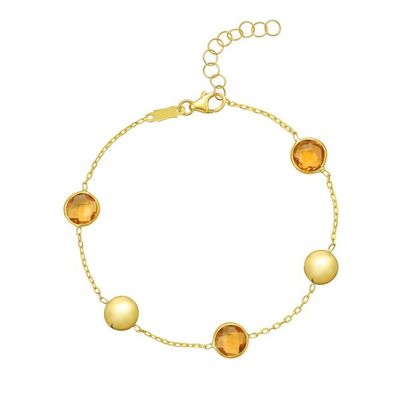 Citrine pebble bracelet, 14K
Browse more: citrine rings · earrings · necklaces · all citrine
Topaz vs. citrine at a glance
| Feature | Topaz | Citrine |
|---|---|---|
| Mineral | Topaz (aluminum fluoro-silicate) | Quartz (silicon dioxide) |
| Birthstone status | Traditional November stone since 1912 | Added in 1952 |
| Colors | Blue, golden, colorless, orange, pink, violet, rare red | Pale yellow to deep reddish orange |
| Hardness (Mohs) | 8 | 7 |
| Toughness | Poor; has cleavage and can chip on a hard knock | Good |
| Common treatments | Irradiation and heat (blue); coating (mystic) | Heat (from amethyst) |
| Value | Blue and white are very affordable; fine Imperial and pink are premium | One of the most affordable yellow gems |
| Anniversary | Blue topaz: 4th; Imperial topaz: 23rd | 13th |
| Ultrasonic cleaner | No | Usually safe (never steam) |
Based on guidance from GIA and Jewelers of America.
Topaz or citrine: which should you choose?
Neither is better. They suit different people, metals and budgets. Here is how we help customers decide at the counter.
Choose citrine if…
- The wearer loves warm, golden tones or wears mostly yellow gold.
- You want a big, bold stone on a modest budget.
- It will see hard daily wear; citrine is the tougher stone.
Choose blue topaz if…
- The wearer prefers white gold or sterling silver.
- You want vivid color that stands out across a room.
- You want size for the money; blue topaz costs little more per carat as stones get bigger.
Choose Imperial or pink topaz if…
- It is a milestone, like a 23rd anniversary or a big birthday.
- You want a collector-quality gem with real rarity.
- You want us to hand-pick a stone and design around it.
Quality, care and cleaning
- Color comes first. Look for even, saturated color. In citrine, avoid brownish or muddy tones; in blue topaz, choose the shade you love.
- Expect a clean stone. Faceted blue topaz is almost always free of eye-visible inclusions, and most citrine is too.
- Check the cut, not just the carat. A well-cut stone sparkles evenly; a shallow cut leaves a washed-out “window” in the center.
- Protect topaz in rings. Topaz can split along its cleavage, so bezel and halo settings are the safer choice. Pendants and earrings see far less wear.
- Ask about treatments. Know whether a stone is natural, heated, irradiated, coated or lab-grown before you buy.
Topaz
- Warm, soapy water and a soft brush.
- Store it apart from diamonds and sapphires.
- No ultrasonic or steam cleaners.
- Avoid hard knocks and sudden temperature changes.
- Keep golden-brown topaz out of long, strong sun.
- No abrasive cleaners on mystic topaz.
Citrine
- Warm, soapy water is always safe.
- An ultrasonic cleaner is usually fine.
- Never steam clean; heat can crack it.
- Avoid abrupt temperature changes.
- Limit long exposure to intense light.
- Keep it away from harsh household chemicals.
Bring gemstone jewelry in twice a year for a professional cleaning and inspection. If a prong is worn, our tip and prong repair is done on our own bench, not shipped away. More tips: caring for gemstone jewelry.
See them side by side
Color is easier to judge in person
Compare topaz and citrine in daylight and store light with our GIA-trained gemologist. No pressure, no obligation.
November birthstone gift ideas
Topaz and citrine are among the easiest fine gemstones to give: colorful, meaningful and well within most budgets.
| Budget | Topaz | Citrine |
|---|---|---|
| Under $250 | Shop topaz | Shop citrine |
| Under $500 | Shop topaz | Shop citrine |
| Under $1,000 | Shop topaz | Shop citrine |
For anniversaries: blue topaz marks the 4th, citrine the 13th and Imperial topaz the 23rd. See our anniversary gift guide for every year.
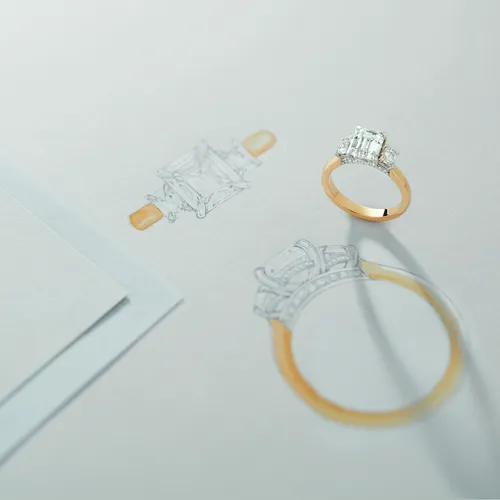
For mothers and grandmothers: a family birthstone ring or pendant sets a November topaz or citrine beside each child’s stone. Our bench jewelers design and make it in house, from sketch to finished piece.
For Scorpios and Sagittarians: topaz and citrine cover the whole month, so either stone suits both signs.
Every order includes free in-store pickup and complimentary gift wrapping, shipping is free over $100 (details), and financing is available. Not sure which stone? Give a gift card.
Questions we hear every November
What is the birthstone for November?
November has two birthstones: topaz and citrine. Topaz is the traditional November stone and was named on the first standardized American birthstone list in 1912. Citrine, a golden variety of quartz, was added as a second November birthstone in 1952.
What is the difference between topaz and citrine?
They are different minerals. Topaz is an aluminum fluoro-silicate that rates 8 on the Mohs hardness scale and comes in many colors, including blue, pink, golden and colorless. Citrine is quartz, rates 7, and ranges from pale lemon yellow to deep reddish orange. In warm golden shades they can look alike, which is why jewelers confused them for centuries.
Is blue topaz a November birthstone?
Yes. Any color of topaz counts as a November birthstone, and blue topaz is the most popular today. Many jewelers also offer blue topaz for December birthdays, which is why you will see it in both months.
Which November birthstone is more valuable?
Fine Imperial topaz (pinkish orange to reddish orange) and vivid pink topaz are the most valuable November stones because those colors are rare. Blue topaz, colorless topaz and citrine are abundant, which makes them some of the most affordable fine gemstones you can buy.
Is heat-treated citrine real citrine?
Yes. Natural citrine is rare, so most citrine sold today is amethyst that has been heated until it turns golden. It is still genuine quartz, and the color change is permanent. A reputable jeweler should tell you whether a stone is natural, heat-treated or lab-grown.
Can you wear topaz every day?
Yes, with a little care. Topaz is hard (8 on the Mohs scale) but it has cleavage, so a sharp knock can chip or split it. For a ring you plan to wear daily, choose a protective setting such as a bezel or halo, and take it off for workouts, yard work and heavy chores. Pendants and earrings see far less wear.
Where can I buy November birthstone jewelry near Southbridge, MA?
Morin Jewelers at 409 Main Street in Southbridge carries topaz and citrine rings, earrings and pendants, and can source or custom design pieces with rarer colors. We serve Sturbridge, Charlton, Dudley, Webster and the rest of Worcester County, plus Thompson, Putnam and Woodstock in northeastern Connecticut. You can also shop online with free in-store pickup.

Family owned since 1920
Find your November stone on Main Street
Some things you can’t judge on a screen, like how a citrine glows in daylight or how deep a London blue really is. Come compare both side by side.
- Visit
- 409 Main Street, Southbridge, MA 01550
- Hours
- Tue–Fri 9:30–5:30 · Sat 9:30–3:00 · Closed Sun & Mon
- Call or text
- (508) 764-7250
Sources:
GIA, November birthstones ·
GIA, topaz care ·
Jewelers of America, citrine.
Morin Jewelers serves Southbridge, Sturbridge, Charlton, Webster, Dudley, Spencer, Oxford, Auburn and all of Worcester County, plus nearby Putnam, Thompson and Woodstock, CT.